Kendi akışınızı oluşturmak için forum hesabınızla giriş yapın.
- Dün
-
Repeated bending strengthens sugar-based hydrogel instead of wearing it down
Most materials get weaker with use. But a team led by Chenfeng Ke, a professor of chemistry in Arts & Sciences at Washington University in St. Louis, has created a polymer that defies the usual laws of wear and tear.
-
Dropping degree requirements linked to higher pay for workers without degrees
The requirements set by human resources (HR) greatly influence the professional opportunities available to different segments of the population. For instance, if a job requires applicants to have earned a bachelor's or master's degree in a relevant subject, people without them may be excluded from the selection process, even if they have gained relevant skil…
-
Babies in ancient Greek colony started solid food at 3 months but nursed for nearly 4 years, chemical signatures suggest
Over 2,500 years ago, Himera was a Greek colony inhabited by local Sicilians, Phoenicians and Greeks. Despite their diverse cultural backgrounds, they all shared one thing: they began weaning their babies early and continued for a long time.
-
Neandertallerin Yok Oluşunda Asıl Etken Biz Olabiliriz
Simülasyonlar, Neandertallerin yok oluşunda iklim değişikliğinden ziyade modern insanların yayılmasının belirleyici olduğunu gösteriyor. Devamı burada: Neandertallerin Yok Oluşunda Asıl Etken Biz Olabiliriz Arkeofili.
-
An ancient failed rift is reawakening inside one of Africa's oldest landmasses
In April 2017, a magnitude 6.5 earthquake shook southern Africa from an unlikely place: the middle of the Kalahari Craton in eastern Botswana. Cratons are the ancient cores of continents, and this one is built from blocks of crust up to 3.7 billion years old. Geologists have long considered such regions too cold, too thick and too rigid to tear apart.
-
Fermi's 14-year all-sky map bridges astronomy's elusive 'MeV gap'
Gamma rays, the most high-energy type of electromagnetic radiation in the universe, have always had a blind spot. We've always had trouble measuring them in the "megaelectronvolt" (MeV) energy range, which astronomers have taken to calling the "MeV gap." But a new paper from an international group of scientists working with the Fermi Large Area Telescope (LA…
-
From screens in class to smart glasses, Norway rethinks new technologies
Three years ago, a schoolteacher in Norway was reprimanded for putting his pupils' iPads aside to return to pen and paper. Now, the whole country is rethinking its approach to new technologies.
-
Parthenon’un Kayıp Doğu Alınlığı Yeniden Canlandırıldı
Araştırmacılar, Roma lahitleri ve 3B yazıcılar yardımıyla Parthenon'un Athena'nın doğuşunu anlatan kayıp doğu alınlığını yeniden canlandırdı. Devamı burada: Parthenon’un Kayıp Doğu Alınlığı Yeniden Canlandırıldı Arkeofili.
-
Neandertal Geni Şizofreni Riskini Azaltıyor Olabilir
Neandertallerden miras kalan bir gen varyantı, beynin görmeyle ilgili bölgesini biraz küçültürken şizofreni riskini de azaltıyor olabilir. Devamı burada: Neandertal Geni Şizofreni Riskini Azaltıyor Olabilir Arkeofili.
-
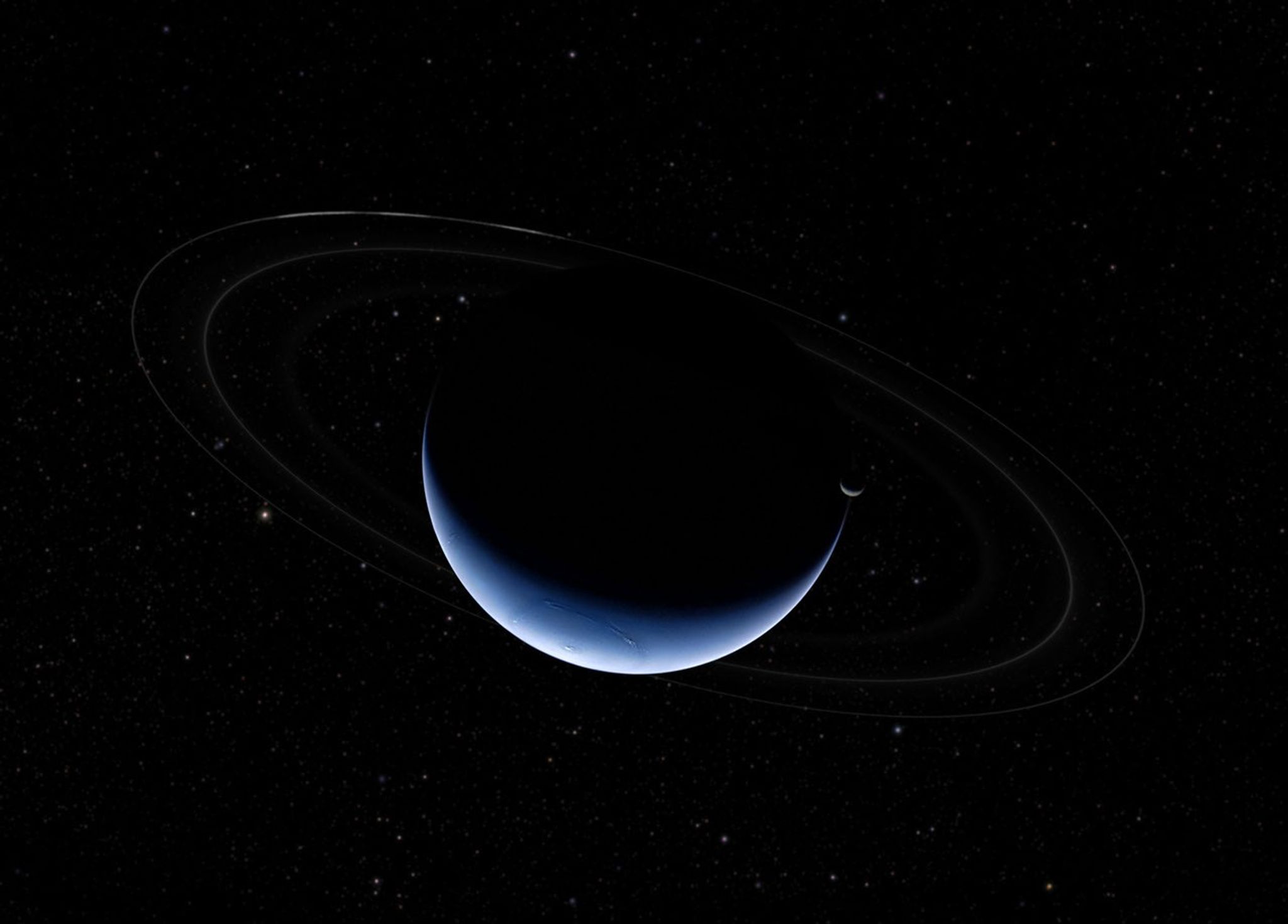
APOD: 2026 November 21 – Voyager’s Neptune
APOD Science APOD APOD: 2026 November 21 –… Today’s APOD Archive Submissions Index Search Calendar RSS Education About Discuss APOD Astronomy Picture of the Day Discover the cosmos! Each day a different image or photograph of our fascinating universe is featured, along with a brief explanation written by a professional astronomer. Voyager’s Neptune Explanati…
-
What makes rock deep beneath continents break away and sink?
We usually picture mountain building as rock being pushed upward. But deep beneath some mountain belts and volcanic arcs, the opposite can happen: dense rock at the base of the crust can become unstable, break away and sink hundreds of kilometers into the mantle, dragging part of the rigid outer shell of the Earth (the lithosphere) with it. Seismic images su…
-
Device that measures strawberry skin's strength will aid breeders
Resilient strawberry varieties will be more easily identifiable thanks to a tool developed by University of Queensland engineering students. The prototype measures the strength of strawberry skin, a key breeding consideration for the Australian Strawberry Breeding Program at Queensland's Department of Primary Industries.
-
Quantum software matches classical benchmark for a molecular interaction
Predicting how molecules interact is central to drug discovery: it offers important information about how a new drug might work in the human body, the side effects it can cause and more. Computationally modeling these interactions can reduce the need for lengthy and expensive lab work, but some interactions still remain beyond the reach of classical computer…
-
The call of the seamount: Two new armored tardigrades described in the Atlantic
An international team led by researchers from Senckenberg am Meer in Wilhelmshaven has described two new species of marine tardigrades. The tiny marine organisms were discovered in the sediment of the Senghor Seamount off the coast of Cape Verde. According to the researchers, the discovery underscores the role of undersea mountains as oases of biodiversity.…
-
Broadening the role of RNA: A messenger, a mediator and now a condensate coordinator
New research about condensates—cellular compartments that act as hubs for facilitating biological reactions—continues to reveal novel insights into how cells function. Among those continuing to push the field forward are members of the Marine Biological Laboratory's condensate consortium, including Amy Gladfelter, a professor at Duke University and current c…
-
'Forever' chemicals? Don't be so sure, says engineer
Inside the disinfection room of Baltimore's Ashburton water filtration plant, 14 University of Maryland students clad in hard hats peered up at six towering vats of bleach used to treat water that flows from the distant Liberty Reservoir into the facility, killing bacteria and other pathogens before it's routed to the region's kitchen sinks.
-
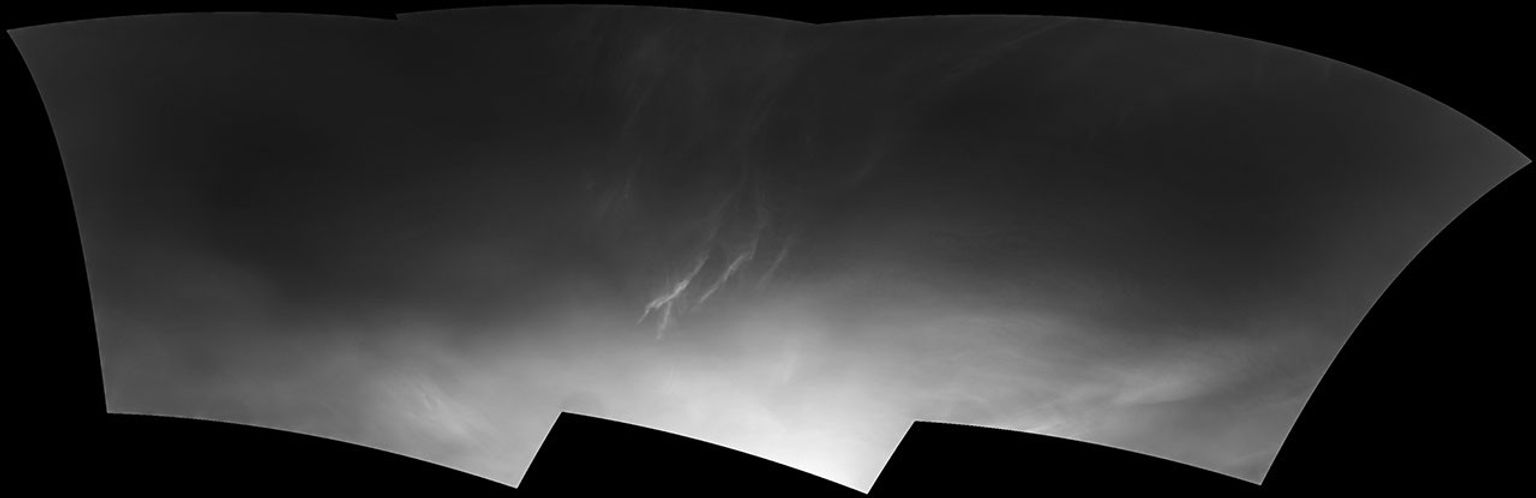
Curiosity Spots Drifting Twilight Clouds
Description NASA’s Curiosity Mars rover captured these drifting clouds on Oct. 31, 2026, the 5,061st Martian day, or sol, of the mission. The rover uses its navigation cameras to capture post-sunset clouds, called twilight clouds, which appear for only a short time each fall over Gale Crater, which it has been exploring for more than […]
-
A fish as old as Montana—the blue sucker discovered to live well over 100 years
Using bomb radiocarbon dating on microscopic otoliths (earstones), researchers have found that a native species of fish in the Upper Missouri River in Montana is living up to 130 years—more than triple the previous estimate of around 40 years—and some blue suckers alive today hatched in the late 1800s, around the dawn of the automobile and when Montana offic…
-
Caribbean corals are in crisis. Fossil reefs can help point to where corals may persist
The fossilized remains of ancient coral reefs often sit just meters from living corals in the Caribbean, where reefs have declined sharply over the past 70 years. Those fossils could help show where corals might survive a warming future. In two new papers, researchers at The University of Texas at Austin identify which coral species dominated ancient reefs i…
-
Ancient bison hunting site in Texas challenges long-held assumptions
For decades, archaeologists questioned whether Native American communities in the Southern Plains hunted bison by driving herds over cliffs, a sophisticated technique widely documented farther north.
-
Scientists discover twist-tunable interlayer excitons in atomically thin anisotropic semiconductors
When light shines on a semiconductor, negatively charged electrons and positively charged holes—empty states left behind when electrons move away—pair up and bind together. This bound state is called an exciton. When two atomically thin semiconductor layers are stacked, electrons and holes can reside in different layers, forming what is known as an interlaye…
-
Gamified mobile payment features may drive adoption among Gen-Z users
Gamified features in mobile payment applications may significantly increase adoption among consumers in emerging economies, with men and women responding in almost identical ways, according to research published in the International Journal of Business Information Systems.
-
Record-setting X-ray laser reliably generates flashes with wavelengths shorter than distances between atoms
Researchers from DESY and European XFEL have demonstrated reliable production and transport of X-ray laser flashes with a wavelength of about 0.04 nanometers (or a photon energy of 30,000 electronvolts) at European XFEL, raising their own world record. This means that the X-ray's wavelength is much shorter than typical distances between neighboring atoms in…
- 20 Kasım Cuma
-
New NASA Seed Funding Primes Small Businesses for Innovation
Awards to small businesses around the country are addressing some of NASA’s most crucial technology needs for exploration of the Moon and Mars while fueling the U.S. space economy. NASA’s Small Business Innovation Research/Small Business Technology Transfer (SBIR/STTR) program recently selected 302 innovative projects, for a total investment of up to $171 mi…
-
Digital imaging workshop aims to reveal secrets in medieval manuscripts
Researchers recently used multispectral imaging technology to try to uncover hidden information from medieval manuscripts at the Rare Book and Manuscript Library at the University of Illinois Urbana-Champaign. The library hosted a digital imaging workshop in early October that served as a pilot study for how the technology can help analyze fragile, centuries…
-
New hemp plant produces no detectable THC, potentially reducing risk of crop destruction
Scientists at Texas A&M AgriLife Research, a member of The Texas A&M University System, have developed a hemp plant that produces no detectable cannabinoids, including THC.
-
Tested on mushrooms, an AI model shows potential for detecting crop stress with far fewer computations
A new artificial intelligence (AI) model can detect stress in agricultural crops using a nondestructive imaging technique, allowing changes in crop health to be monitored over time. Developed by a team of researchers at Penn State, the new model shows promise for accurately detecting crop stress caused by drought, disease, nutrient deficiency and other cause…
-
Can Instagram reduce prejudice? Study reveals the potential and limits of social media contact
A research team at the University of Potsdam has conducted a field experiment to investigate whether contact through social media can reduce prejudice. The findings suggest that following an unfamiliar Instagram profile for just three days can lead to more favorable attitudes—not only toward the group represented by the profile. The study was published in th…
-
A million tiny crystals reveal how semiconductors form distinct cores and shells
Perovskites and related materials called perovskitoids are promising semiconductor materials for solar cells, LEDs and light detectors. Their ingredients and internal crystal structures determine how they absorb and emit light. A chip just 2 centimeters across can hold roughly a million tiny crystals—becoming a miniature material library that can show how so…
-
Hazardous glacial lakes need reservoir-style safety oversight, says researcher
As the climate warms, thousands of glacial lakes are growing behind potentially unstable natural dams. Despite the potential risk of flooding to communities downstream, these lakes remain outside formal safety regulation.
-
People wade through floodwater because they underestimate danger—how to avoid risk
A footpath home disappears beneath brown water. The other side is only a few meters away and someone has already crossed. Turning back means a long detour and you will be late. Would you wade through? This is the kind of everyday decision that flood safety advice must address.
-
Global analysis reveals how lakes amplify glacier ice loss
Glacial lakes can accelerate the retreat of glaciers. If glaciers border a lake, the water can melt the ice from underneath; furthermore, chunks of ice can break off and fall into the lake. The extent to which these processes influence the situation, compared with other factors, had not been sufficiently clarified at a global level until now.
-
X-ray technique advances temperature measurements under extreme pressure
Scientists at Lawrence Livermore National Laboratory (LLNL) have advanced the ability to measure temperatures in materials subjected to extreme pressures at the National Ignition Facility (NIF), providing new insights into how materials behave under conditions relevant to national security and high-energy-density physics.
-
Parasite protein expands understanding of how mitochondria build their ribosomes
Mitochondria are essential components of the cells of most organisms, including humans. They are often referred to as the cell's powerhouses because they produce the energy needed for cellular functions. However, mitochondria originally evolved from free-living bacteria that were engulfed by other cells in the distant past.
-
Mapping the microbes' arms race with viruses at planetary scale
Microbiomes are complex ecosystems, in which bacteria and archaea are constantly interacting with, and infected by, viruses. These viruses can significantly impact microbiome processes, not only by killing their host but also sometimes by temporarily providing additional capabilities to their host. As many viruses have not been grown in a lab, connecting the…
-
El Niño created a skiers' paradise in Chile—now it's Sierra Nevada and southern Rockies' turn
El Niño has a reputation for being a skier's dream, bringing lots of snow to California's Sierra Nevada and the southern Rockies. Tahoe-area resorts were already seeing the effects in mid-November 2026 as several feet of snow fell and some resorts prepared to open early for the season. But El Niño's supercharged precipitation can spell trouble, too.
-
Practical organ-on-a-chip platform helps assess the toxicity of environmental chemicals
Among the thousands of chemicals used in daily life, toxicity information is available for only a small fraction. Much of this information comes from high-dose animal studies, which are costly, time-consuming and limited by species differences.
-
New sources of neurotoxin linked to algal blooms uncovered in Florida and Kansas
Researchers have identified two previously unreported strains of freshwater cyanobacteria capable of producing a potent neurotoxin that poses risks to people, pets, wildlife and water resources and that some scientists suspect may have contributed to previous animal deaths.
-
Bumblebees challenge long-held beliefs about brain size and intelligence
Bigger brains mean greater intelligence, or so conventional wisdom goes. After all, humans have much larger brains than most other animals and are generally considered the planet's most intelligent species.
-
Is it genuine love—or obsessive passion? Kierkegaard, the father of existentialism, had some thoughts
Young love, honeymoon love, infatuation—these often feel spectacular. You have a burning need to be in constant contact, and you don't want to let that person out of your sight.